
How a Colorado bill to study ‘opportunity gaps’ might impact public education

April 29, 2026
Task force might offer neutral inquiry, but could it be used to promote alternative schooling options like charter schools?
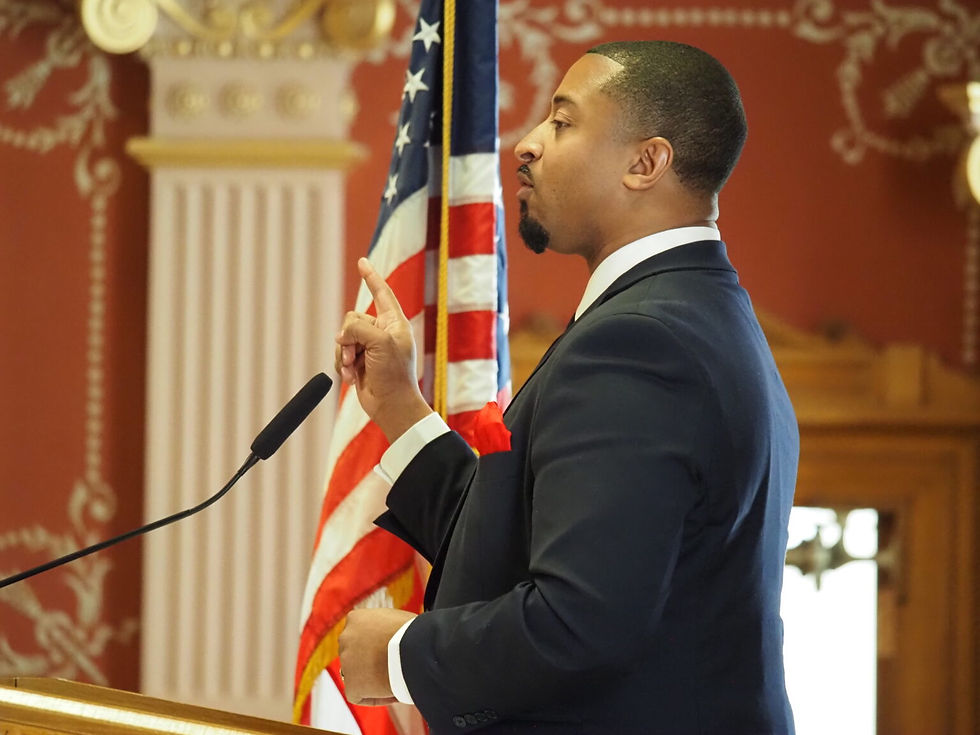
Colorado Senate President James Coleman is once again promoting changes in the state’s public education system.
His latest proposal, Senate Bill 26-170, was approved by the Senate Education Committee on April 22 and is poised to pass in the full Senate. The bill would create an 18-member task force to study the “opportunity gaps” that impact some students’ ability to succeed in school. The group’s final charge is to define how Colorado can “redesign its education system to better support innovation, continuous improvement, and future-ready learning models.”
On its surface, the bill offers a structured opportunity to examine student achievement data, gather stakeholder input, and develop future policy recommendations. However, it raises a more fundamental question: Is this task force a neutral inquiry, or a strategic step toward expanding alternative schooling options like charter schools?
In March 2025, Coleman proposed loosening restrictions on charter school authorization to address “education deserts,” a term popularized by the conservative Fordham Institute to describe areas where families have limited access to high-performing schools. The framing of SB-170 aligns closely with that earlier agenda, requiring the task force to study how to “expand access to effective public schools.”
The bill’s underlying assumptions also warrant scrutiny. It leans heavily on identifying schools or systems that “beat the odds” on CMAS standardized test scores, with the implicit goal of replicating those models in communities where schools are perceived to be underperforming. Yet many of the strategies that improve outcomes, such as equitable funding, experienced educators, and wraparound supports, are already well documented. Research from the Learning Policy Institute consistently shows that poverty and inequitable funding are major drivers of these gaps, particularly when outcomes are measured primarily through standardized tests.
By many measures, Colorado’s schools are not failing. Graduation rates are at their highest level in more than a decade, and dropout rates are at historic lows. These trends suggest progress, even as disparities persist. By focusing heavily on testing metrics, the bill risks reinforcing a narrow and potentially misleading definition of student success while overlooking broader social and economic factors.
Coleman previously acknowledged that his “education desert” proposal lacked a funding mechanism. That reality may now be changing. A potential funding source has emerged in the Colorado Schools Fund, launched in late 2024. Backed by philanthropic and charter-aligned leadership, their mission closely mirrors the education desert concept: to start and support charter schools and other “innovative” public models in communities identified as underserved or in need of higher-performing options.
The Colorado Schools Fund’s board includes Jill Anschutz of the Anschutz Foundation, who is also on the board of the Charter School Institute; Darryl Cobb of the Charter School Growth Fund; Hannah Skandera of the Daniels Fund; and Rosemary Rodriguez, also on the board of the Colorado League of Charter Schools. With a reported $50 million commitment over five years, the fund is training leaders to open new charter and microschools across the state.
In this context, SB-170 takes on added significance. A task force charged with identifying “opportunity gaps” could effectively map where new schools and potentially new investments should be directed. The result may not simply be a study, but a blueprint for future expansion.
The structure of the task force will also be critical in determining its impact. Appointments will be made by legislative leadership, including Coleman, House Speaker Julie McCluskie, Gov. Jared Polis, and Education Commissioner Susana Córdova, along with Republican leaders. Who is selected, and whose perspectives are prioritized, will shape both the analysis and the final recommendations. If the task force is dominated by stakeholders aligned with charter school expansion, its findings could carry the weight of state endorsement while reflecting a limited range of viewpoints.
The political context further complicates the picture. The task force is expected to deliver its findings in January, just as Colorado prepares to swear in a new governor. Coleman, McCluskie, and Córdova have all endorsed Michael Bennet, a candidate with a long record of supporting charter schools and education reform initiatives. His campaign has also received significant financial backing from donors and organizations that support school choice and charter expansion.
The question is not whether opportunity gaps exist, but how they are defined, and what solutions are pursued. Are these gaps primarily the result of school performance, or of broader inequities in funding and community resources? And will the state respond by investing more deeply in existing public schools, or by expanding alternative models?
As SB-170 moves forward, those questions remain unresolved, and they may ultimately matter more than the task force itself.
Colorado Newsline is part of States Newsroom, a nonprofit news network supported by grants and a coalition of donors as a 501c(3) public charity. Colorado Newsline maintains editorial independence. Contact Editor Quentin Young for questions: info@coloradonewsline.com.



Comments